

- Home
- Request for Quote
- Products
- Variable Frequency Drive Systems and Controls
- AC Variable Frequency Drives
- ABB ACS150 Component Drives :: Overview
- ABB ACS150 Component Drives :: Technical Specifications
- ABB ACS150 Component Drives :: Ratings, Types, Voltages and Construction – Prices
- ABB ACS150 Component Drives :: Dimensions, Weight and Noise
- ABB ACS150 Component Drives :: Interface and Options (prices)
- ABB ACS150 Component Drives :: Technical Data
- ABB ACS150 Component Drives :: Control Connections
- ABB ACS350 General Machinery Drives :: Overview
- ABB ACS350 General Machinery Drives :: Technical Specifications
- ABB ACS350 General Machinery Drives :: Ratings, Types, Voltages and Construction
- ABB ACS350 General Machinery Drives :: Dimensions, Weight and Noise
- ABB ACS350 General Machinery Drives :: Interface and Options (prices)
- ABB ACS350 General Machinery Drives :: Technical Data
- ABB ACS350 General Machinery Drives :: Control Connections
- ABB ACS550 AC Variable Frequency Drive :: Overview
- ABB ACS550 AC Variable Frequency Drive :: Hardware Description
- ABB ACS550 AC Variable Frequency Drive :: Standard Features and Options
- ABB ACS550 AC Variable Frequency Drive :: Specifications
- ABB ACS550 AC Variable Frequency Drive :: 230V Ratings (pricing)
- ABB ACS550 AC Variable Frequency Drive :: 380V Ratings (pricing)
- ABB ACS550 AC Variable Frequency Drive :: 480V Ratings (pricing)
- ABB ACS550 AC Variable Frequency Drive :: Dimensions: ACS550 NEMA 1 R1 through R6 Frame Size
- ABB ACS550 AC Variable Frequency Drive :: Dimensions: ACS550 NEMA 12 R1 through R6 Frame Size
- ABB ACS550 AC Variable Frequency Drive :: Dimensions: ACS550-02 NEMA 1 R7 Frame Size
- ABB ACS550 AC Variable Frequency Drive :: Dimensions: ACS550-02 NEMA 1 R8 Frame Size
- ABB ACS550 AC Variable Frequency Drive :: Dimensions: ACS550-U2 NEMA 1 R7 & R8 Frame Size
- ABB ACS 600 Adjustable Speed AC Drives
- ABB ACS800 AC Variable Frequency Drive :: Overview
- ABB ACS800 AC Variable Frequency Drive :: Standard Features / Available Options and Software
- ABB ACS800 AC Variable Frequency Drive :: Specifications
- ABB ACS800 AC Variable Frequency Drive :: Basic Type Code Information
- ABB ACS800 AC Variable Frequency Drive :: 230V Ratings (pricing)
- ABB ACS800 AC Variable Frequency Drive :: 380V Ratings (pricing)
- ABB ACS800 AC Variable Frequency Drive :: 460V Ratings (pricing)
- ABB ACS800 AC Variable Frequency Drive :: ACS 800-U2 NEMA 1 R7 & R8 Frame Size and ACS 800-02+C111 IP21 (NEMA 1) R7 & R8 Frame Size
- ABB ACS800 AC Variable Frequency Drive :: ACS 800 NEMA 1/12 R2 through R6 Frame Size
- ABB ACS800 AC Variable Frequency Drive :: ACS 800-02 NEMA 1 R7 & R8 Frame Size
- ABB ACS800 AC Variable Frequency Drive :: ACS 800-U4 Module R7 Frame Size
- ABB ACS800 AC Variable Frequency Drive :: ACS 800-U4 Module R8 Frame Size
- ABB ACS880 Industrial Low Voltage AC Drives
- ABB ACS880 AC Drives – Technical Data
- Wall-mounted single drives, ACS880-01
- ABB ACS880 Ratings, types and voltages
- ABB ACS880 AC Drives – Dimensions & Connectivity
- ABB ACS880 AC Drives – Standard Software
- ABB ACS880 AC Drives – Intuitive Human-Machine Interface
- ABB ACS880 AC Drives – Integrated Safety
- ABB ACS880 AC Drives – Flexible Connectivity
- Input/output Modules, Speed Feedback Interfaces & Communication Modules
- ABB Softstarters, Type SSM, Medium Voltage, 2300-13,800V :: Description
- ABB Type SSM Softstarters – Medium Voltage, 2300-13,800V :: General Information
- ABB Type SSM Soft Starters – Medium Voltage, 2300 – 13,800V :: Catalog Numbers
- ABB Soft Starters, Type SSM – Medium Voltage, 2300-13,800V :: Technical Data
- ABB Softstarters, Type SSM, Medium Voltage, 2300-13,800V :: Approx. Dimensions
- Yaskawa AC Drives
- AuCom Soft Starters
- Emerson Industrial Automation (Control Techniques and Saftronics) AC Drives
- Control Techniques – Commander SE AC Drive
- Control Techniques – Commander SK AC Drive
- Commander SK :: Features
- Commander SK :: Terminal Diagram and Description
- Commander SK :: Specifications and Dimensions
- Commander SK – Options :: Overview
- Commander SK – Options :: Configuration and Programming
- Commander SK :: Operator Interface
- Commander SK :: Power Accessories
- Commander SK :: Environmental Protection and Cable Management
- Commander SK :: Input / Output
- Commander SK :: Communication
- Commander SK :: Programming Software
- Control Techniques – Commander SX AC Drive
- Commander SX :: Features, Ratings, Prices and Ordering
- Commander SX :: Terminal Diagram and Description
- Commander SX:: Specifications and Dimensions
- Commander SX :: Options – Overview / Drive Configuration and Programming
- Commander SX :: Communication / Operator Interface
- Commander SX :: Power Accessories
- Commander SX :: Input/Output and Communication
- Control Techniques – Unidrive SP AC Drive
- Unidrive SP :: Features
- Unidrive SP :: Ratings, Prices & Ordering – Wall Mount
- Unidrive SP :: Ratings, Prices & Ordering – Free Standing Cubicle
- Unidrive SP :: Unidrive SP Regen Mode
- Unidrive SP :: Terminal Diagram and Description
- Unidrive SP :: Specifications and Dimensions
- Unidrive SP :: Options – Overview
- Unidrive SP :: Operator Interface
- Unidrive SP :: Power Accessories
- Unidrive SP :: Option & Feedback Modules
- Unidrive SP :: Option Input / Output Modules
- Unidrive SP :: Option Application / Programming Modules
- Unidrive SP :: Option Communication Modules
- Unidrive SP :: Drive Configuration and Programming
- Unidrive SP :: Application Programming Software
- Unidrive SP :: Pre-packaged Solutions
- Saftronics GP10 AC Drives
- Saftronics GP10 – Pricing, Dimensions & Weights
- Saftronics GP10 – Optional DC Link Reactors
- Saftronics GP10 – Options & Accessories
- Saftronics GP10 – Palm Pilot Saflink Kit
- Saftronics GP10 – SR10 Radio Modem Kit
- Saftronics GP10 – Relay Output Card
- Saftronics GP10 – Digital I/O Interface Card
- Saftronics GP10 – Analog I/O Interface Card
- Saftronics GP10 – SF-10 Ethernet Module
- Saftronics GP10 – Interface Option Card
- Saftronics GP10 – Under Torque Detection Option
- Saftronics GP10 – 24 VDC or 24/120 VAC Interface
- Saftronics GP10 – Air Pressure Sensor + V/I Converter Output Card
- Saftronics GP10 – HMI Pump Controller
- Saftronics GP10 – SDBU – Dynamic Brake Module
- Saftronics GP10 – 208-230V Dynamic Brake Packages
- Saftronics GP10 – 460V Dynamic Brake Packages
- Saftronics GP10 – Ratings Efficiency & Watts Loss
- Saftronics GP10 – Standard Specifications
- Saftronics GP10 – Basic Connection Diagram
- Saftronics GP10 – Basic Connection Diagram to PLC
- Saftronics GP10 – Basic Connection Diagram (Europe)
- Saftronics GP10 – Basic Connection to PLC (Europe)
- Saftronics S10 AC Drives
- Saftronics S10 – Options and Accessories
- Saftronics S10 – Standard Specifications
- Saftronics S10 – Dimensions
- Saftronics S10 – Dimensions – Part Number: S102002 – S102003 & S104001 – S104003
- Saftronics S10 – Dimensions – Part Number: S102F25 – S102001
- Saftronics S10 – Dimensions — Part Number: S102F25 – S102001 no Operators
- Saftronics S10 – Dimensions – Part Number: S102002-2003 & S104001-4003
- Saftronics S10 – Basic Wiring Diagram
- Saftronics CV10 AC Drives
- Saftronics CV10 – Part Numbers, Dimensions & Weights
- Saftronics CV10 – LED Keypad with Speed Pot
- Saftronics CV10 – LCD Keypad (supports 5 Languages)
- Saftronics CV10 – Keypad Extension Cable
- Saftronics CV10 – Communication Option Cards
- Saftronics CV10 – Bi-Polar Speed Reference Option Card
- Saftronics CV10 – Standard Specifications
- Saftronics CV10 – Ratings Efficiency and Watts Loss
- Saftronics CV10 – Dimensions Frame 1 – IP20 (Open Chassis)
- Saftronics CV10 – Dimensions Frame 1 – NEMA 1
- Saftronics CV10 – Dimensions Frame 2 – IP20 (Open Chassis)
- Saftronics CV10 – Dimensions Frame 2 – NEMA 1
- Saftronics CV10 – Dimensions Frame 3 – IP20 (Open Chassis)
- Saftronics CV10 – Dimensions Frame 3 – NEMA 1
- Saftronics CV10 – Basic Wiring Diagram
- Saftronics VG10 AC Drive
- Saftronics VG10 – Pricing, Dimensions & Weights
- Saftronics VG10 – Optional DC Link Reactors
- Saftronics VG10 – Options and Accessories
- Saftronics VG10 – Palm Pilot Saflink Kit
- Saftronics VG10 – Relay Output Card
- Saftronics VG10 – SR10 Radio Modem Kit
- Saftronics VG10 – Digital I/O Interface Card
- Saftronics VG10 – Analog I/O Interface Card
- Saftronics VG10 – SF-10 Ethernet Module
- Saftronics VG10 – PGX Encoder Feedback Card
- Saftronics VG10 – Encoder + Analog Output Card
- Saftronics VG10 – PG Feedback Card SOPCG11SPG
- Saftronics VG10 – PG Feedback Card SOPCG11SPG2
- Saftronics VG10 – Synchronized Operation Card
- Saftronics VG10 – 24 VDC or 24/120 VAC Interface Card Kit
- Saftronics VG10 – Air Pressure Sensor + V/I Converter Output Card
- Saftronics VG10 – SDBU – Dynamic Brake Module
- Saftronics VG10 – 208-230V Dynamic Brake Packages
- Saftronics VG10 – 460V Dynamic Brake Packages
- Saftronics VG10 – Ratings Efficiency and Watts Loss
- Saftronics VG10 – Standard Specifications
- Saftronics VG10 – DC Link Reactor 100 HP and Above
- Saftronics VG10 – Basic Connection Diagram (Sink Logic, Mainly America)
- Saftronics VG10 – Basic Connection Diagram to PLC (Sink Logic, Mainly America)
- Saftronics VG10 – Basic Connection Diagram (Source Logic, Mainly Europe)
- Saftronics VG10 – Basic Connection Diagram to PLC (Source Logic, Mainly Europe)
- Saftronics PC10 (Obsolete) AC Drives
- Saftronics PC10 – Options & Accessories
- Saftronics PC10 – SF-10 Ethernet Module Kit
- Saftronics PC10 – 24 VDC or 24/120 VAC Input + Relay Option Card
- Saftronics PC10 – 24 VDC or 24/120 VAC Interface Card Kit (PC10, GP10, or VG10 Inverter)
- Saftronics PC10 – Relay Output Card
- Saftronics PC10 – HMI Pump Controller
- Saftronics PC10 – PC10 120 VAC Option Card
- Saftronics PC10 – Palm Pilot Saflink Kit
- Saftronics PC10 – Dynamic Braking
- Saftronics PC10 – Drive Ratings Efficiency and Watts Loss
- Saftronics PC10 – Standard Specifications
- Saftronics PC10 – Part Number: PC102F12-9, PC102F25-9, PC102F50-9 & PC102001-9
- Saftronics PC10 – Part Number: PC102002-9, PC102003-9, PC104F50-9, PC104001-9, PC104002-9 & PC104003-9
- Saftronics PC10 – Part Number: PC102005-9 & PC104005-9
- Saftronics PC10 – Part Number: PC102007-9, PC102010-9, PC104007-9 & PC104010-9
- Saftronics PC10 – NEMA 1 Kit Dimensions
- Saftronics PC10 – Basic Wiring Diagram
- Fincor 5700 Series (Obsolete) AC Drive
- Fincor 5740 Series (Obsolete) AC Drive
- Fincor 5750 Series (Obsolete) AC Drives
- Motortronics Soft Starters
- SOLCON Soft Starters
- SOLCON RVS-DN Digital Soft Starter with Advanced Motor Protection
- Solcon HRVS-DN Digital Soft Starter with Advanced Motor Protection
- Solcon HRVS-TX Digital Transformer Soft Starter
- SOLCON RVS-AX Analog Soft Starters
- SOLCON Solstart Plus Analog Soft Starters
- SOLCON RVS-BX Basic Soft Starter with Built-In Bypass
- SOLCON RVS-DX Digital Soft Starter with Built-In Bypass
- SOLCON RVS-EX Digital Soft Starter for Explosion Proof motors with Built-In Bypass
- SOLCON SEM-N Rugged Soft Starter for Naval and Military Specifications
- SOLCON SOLSTART Miniature Analogue Soft Starter
- SOLCON SOLSTART 1P Single Phase Analogue Soft Starter
- SOLCON SOLBRAKE DC Injection Brake Soft Starter
- Magnetek – Soft Starters
- WEG Variable Frequency Drives, Controls and Motors
- ABB ACS150 Component Drives :: Overview
- DC Variable Speed Drives
- DC Drive Fundamentals
- ABB DCS 400 Digital DC Converter Drive
- ABB DCS 500 DC Drive
- ABB DCS800 DC Drives Overview
- DCS800 – Power Converter Modules
- DCS800 Panel Drive
- DCS800 Enclosed Converters
- DCS800 Rebuild and Upgrade Kits
- Adaptive Programming and Start-up Assistants
- DriveWindow Light – Startup and Maintenance Tool
- DCS800 Commissioning Macros
- DCS800 Firmware
- DCS800 Technical Specifications
- Current Ratings – Modules – Non-Regenerative
- Current Ratings – Modules – Regenerative
- Current Ratings – Modules – DCS800-EP Panel Drive
- DCS800 Dimensions and Weights
- DCS800 Technical Diagram
- DCS800 Plug-in Options
- DCS800 Feedback Options
- DCS800 Communication Options – Fieldbus Control
- DCS800 External Field Supply
- ABB DCS800-EP replaces Reliance FlexPak® 3000 – 230V Drive Cross Reference
- ABB DCS800-EP – 460V Drive Cross Reference
- ABB DCS800-EP – Options Cross Reference
- ABB DCS800-EP – Product Differences and Remedies – Hardware
- ABB DCS800-EP – Product Differences and Remedies – Control/Interface & Features
- ABB DCS800-EP – Drive Dimensions
- ABB DCS800-EP – Installation Procedure – Wiring and Configuration
- ABB DCS800-EP – Parameter Cross-Reference
- FINCOR Series 2600/2610 DC Drives
- 50 Amp & 90 Amp DC Field Regulators
- Mentor II | Quantum III | FXM5 Change of Status
- SIMOREG 6RA24 Siemens DC Drive Features
- SIMOREG 6RA70 Siemens Variable Speed DC Drive Description and Base Drive Catalog Numbers
- SIMOREG 6RA70 Siemens DC Drive Features
- SIMOREG 6RA70 DC Master Design & Operation – Converters
- SIMOREG 6RA70 Design & Operation – Parameterization Devices
- SIMOREG 6RA70 Design & Operation – Software Structure
- SIMOREG 6RA70 Design & Operation – Closed-Loop Functions in Armature Circuit
- SIMOREG 6RA70 Design & Operation – Closed-Loop in Field Circuit
- SIMOREG 6RA70 Design & Operation – Optimization Run
- SIMOREG 6RA70 Design & Operation – Monitoring & Disgnosis
- SIMOREG 6RA70 Design & Operation – Functions of Inputs & Outputs
- SIMOREG 6RA70 Design & Operation – Safety Shutdown (E-STOP)
- SIMOREG 6RA70 Design & Operation – Serial Interface
- 1000 Hp DC Variable Speed Drive System
- 3000 Hp DC Variable Speed Drive
- Permanent Magnet DC Motors
- SCR Drive Controllers (SCR-Silicon Controlled Rectifier)
- Custom Electric Control Panel Shop
- GE AC & DC Motors (G.E. Motors – General Electric AC & DC Motor)
- GE X$D Ultra® NEMA Premium Efficiency – TEFC AC Motors
- GE Kinamatic® Explosion Proof AC Motors
- GE Energy Saver® – TEFC Severe Duty AC Motors
- GE Kinamatic® General Purpose AC Motors
- GE Motors Energy Saver NEMA Premium Efficiency – ODP AC Motors
- GE ValueLine™ EPAct Efficiency – TEFC AC Motors
- GE ValueLine™ EPAct Efficiency – ODP AC Motors
- GE Permanent Magnet Custom DC Motors
- GE ValueLine™ Vertical Hollow Shaft AC Motors
- GE Permanent Magnet Standard DC Motors
- GE ASD Inverter Duty AC Motors
- G.E. Permanent Magnet Washdown DC Motors
- Avtron – Drives, Measurement and Tachs
- Avtron – Adjustable Speed Drives and Drive Systems
- Avtron – Speed and Length Measurement
- Avtron – Tachs, Tachometers, Encoders, Rotary Pulse Generators
- Avtron – Sales Literature and Instruction Sheets
- Avtron – Classic Tach Models
- Avtron – Price Quotation Request Form
- Avtron – Tachometers Availability
- Avtron – Heavy, Mill-Duty Encoders
- Avtron – Setting Air Gap on M285 Sensors
- Avtron – M4 Universal Encoder
- Avtron – M56, M67, M85 THIN-LINE
- Avtron – M285QUAD Outline Drawing
- Avtron – Severe Duty Encoders
- Avtron – Mill-Duty Encoders
- Avtron – M3 Universal Encoder
- Avtron – M3 Applications
- Avtron – M3 Installation
- Avtron – M3 Specifications
- Avtron – Tach Accessories
- Avtron – Tach Solutions
- Avtron – Rugged Environments
- Avtron – Selection by Motor Frame Size
- Avtron – Adapter Kits Outline Drawings
- Avtron – Motors with Brakes
- Avtron – NEMA C Face Mounting
- Avtron – Market Specific Applications
- Dynapar Encoders and Tachs
- ACURO AI25 Encoders
- Acuro Series AI25 Absolute Encoder with DeviceNet Interface
- Acuro Series AI25 Absolute Encoder with Profibus Interface
- Acuro Series AI25 Absolute Encoder with Interbus Interface
- Acuro Series AI25 Absolute Encoder with BiSS Interface
- Acuto Series AI25 Optical Encoders with SSI Interface
- Acuro Series AI25 Absolute Encoder with Parallel Interface
- Acuro Series AD25 Drive Absolute Encoder
- Series R25 – Mill Duty, HOUSED Resolver
- Series 21/22 Heavy Duty Incremetal Encoders
- Series H20 Encoder
- Series HA25 Dynapar Heavy Duty Encoders
- Series HR25 Incremental Encoders
- Series HC25 Incremental Encoders
- Series H58 Heavy Duty Encoders
- Series H42 Heavy Duty Encoders
- Series HA725 Indusrtial Duty Encoders
- Series HD20 Optical Encoder
- Series HD25 Optical Encoder – Harsh Duty
- Series H56 Rotopulser Heavy Duty Encoders
- RIM Tach 6200 Digital Tachometer
- Series X25 Incremental Encoders
- Series 60 Rotopulser Incremental Encoders
- Series H20 Hub Shaft Encoders
- Series HSD25 Harsh Duty Optical Encoders
- Series HSD44
- Series HS20 Sealed Hollow Shaft Encoders
- Series HS35 Sealed Hollow Shaft Encoders
- The NEW HS35R
- Series HSD35 Shaftless Optical Encoder
- Series HSD37 Hollowshaft Rotary Encoder
- Series HSD38 Harsh Duty Optical Encoder
- Series DWD38 Heavy Duty Rotary Encoders
- SLIM Tach HS56 Incremental Encoder / Tachometer
- RIM Tach HS85 Digital Tachometer
- SLIM Tach SL56 Rotary Encoder
- SLIM Tach RL67 Incremental Rotary Encoder
- SLIM Tach SL85 Digital Tachometer
- SLIM Tach SL1250 Incremental Encoder
- RIM Tach 8500 Digital Tachometer
- RIM Tach 1250 Digital Tachometer
- Series R45 Rotopulser Incremental Encoders
- ACURO AI25 Encoders
- Spare Parts and Replacement Parts
- PLC (Programmable Logic Controllers)
- Services
- Projects
- Operator Stations by Joliet Technologies
- AC VFD, AC Controllers and DC VSD by Joliet Technologies
- Material Handling Modernization Project by Joliet Technologies
- 10 DC (SCR) Drive System :: Neptune Marine Oil & Gas
- Mermaid Offshore Services :: 4 DC (SCR) Drive Cabinets
- “Frontier Driller” Offshore Oil Rig :: DC (SCR) Drive Bays
- 1000Hp Siemens SIMOREG 6RA70 DC Variable Speed Drive Retro-Fit
- Smurfit-Stone: Corrugator Crew Sets Production Record
- Steel Slitting Line for Braner USA
- 1000HP DC Drive, Bow Thruster Application for Pegler Automation
- 1000HP DC Traction Motor Drive, Slurry Pump Application for Baker Hughes
- Siemens 6RA70 DC Drive and GE 752 Traction Motor to Hallett Materials
- ABB ACS 800 VFD to Applied Synergistic
- Two 200Hp Variable Speed DC Drives and Motors to JHT Electronics
- Substrate Technology Inc. :: Joliet Technologies, L.L.C.
- Wyco Tool Company
- Variable Frequency Drives and Controls for Food Processing and Bakery Machinery
- Information
- Guide to Harmonics with AC Variable Frequency Drives
- Variable Speed Drives – Application Information
- Reducing harmonics caused by variable speed drives
- FAQ – Variable Speed Drives Frequently Asked Questions
- EASA Electrical Engineering Handbook
- Part Winding Start
- 3Ph Motors, Single Speed
- 3Ph Motors, 2 Speed, Single Winding
- Connections for NEMA DC Motors
- Connections for NEMA DC Generators
- Field Polarities of DC Machines
- Maximum Locked-Rotor Currents – Three-Phase Squirrel Cage Motors
- NEMA Code Letters for AC Motors
- General Speed-Torque Characteristics
- Effect of Voltage unbalance on Motor Performance
- Starting Characteristics of Squirrel Cage Induction Motors
- Allowable Starts and Starting Intervals
- NEMA Size Starters for Three-Phase Motors
- Starter Enclosures
- NEMA Size Starters for Single-Phase Motors
- Determining the Polarization Index of Machine Windings
- Formulas for Electrical Motors
- Motor Application Formulas
- Glossary of Terms
- Variable Frequency Drive (VFD) Case Studies
- VFD Case Studies – ABB drives & motors help to launch lifeboats quickly and safely.
- VFD Case Studies – Paperboard mill benefits from using DC drives
- VFD Case Studies – ABB Drive cuts water pumping bill for semiconductor plant.
- VFD Case Studies – Insulation manufacturing process saves energy with ABB :: Joliet Technologies
- VFD Case Studies – ABB drives cut costs at MINI production plant
- VFD Case Studies – Film maker slashes costs with ABB drives
- VFD Case Studies – ABB drive cuts costs for wooden toy company
- VFD Case Studies – Close pump control doubles efficiency for West of Scotland Water
- VFD Case Studies – ABB Energy Appraisal Saves Money :: Joliet Technologies
- VFD Case Studies – Staggering energy savings prove value of professional audit
- VFD Case Studies – Soft starters save costs for mechanical engineers
- NEMA Frame Chart and T-Frame Chart :: Joliet Technologies
- Model 1681 Instruction Manual – Firing Circuits DC SCR Drives
- IGBT – Insulated Gate Bipolar Transistors :: Joliet Technologies
- Blog
Blog
2026 Top Sewer Grate Types for Global Buyers
Global buyers are rethinking the humble Sewer Grate. It is no longer just a steel cover over a drain. It must manage runoff, resist traffic, prevent blockages, and protect pedestrians in demanding environments. The UN World Urbanization Prospects projects that nearly 70% of people will live in urban areas by 2050. More paved surfaces will increase pressure on drainage networks, especially during short, intense storms.
Market choices now include cast-iron trench grates, ductile-iron road grates, stainless-steel channel grates, galvanized-steel options, and composite drainage covers. Each type behaves differently under vehicle loads, salt exposure, sediment, and repeated maintenance. EN 124-2:2015 classifies gully and manhole covers by load category, from pedestrian areas to heavy-duty carriageways. Buyers should not treat those classes as decoration. A grate beside a warehouse entrance may need a different rating from one in a landscaped courtyard.
Professor Richard Ashley, a recognized urban-drainage researcher, has emphasized that “drainage is a service, not merely a pipe network.” That principle matters when comparing suppliers. The right Sewer Grate must fit the complete system, including frame depth, hydraulic capacity, opening design, locking method, and cleaning access. Reports from the WHO and UN-Water continue to connect resilient sanitation infrastructure with public health and climate adaptation. Still, product brochures often hide practical weaknesses. A strong-looking grate can clog quickly. A corrosion-resistant finish can fail at damaged edges. This guide compares leading Sewer Grate types for global buyers, while acknowledging one uncomfortable truth: specifications alone cannot replace site experience.
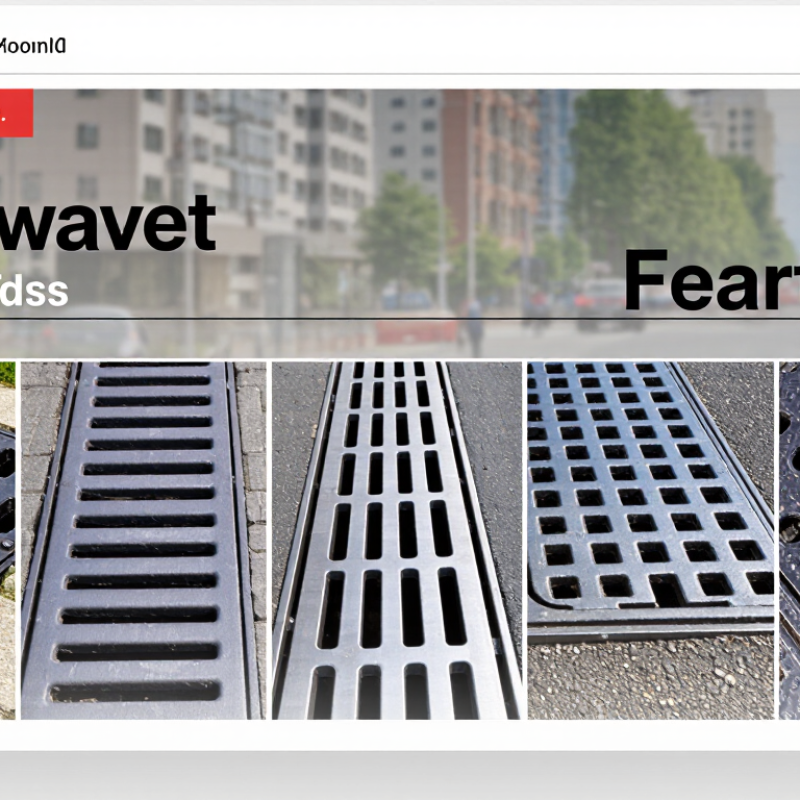
What Is a Sewer Grate and Why Does Its Type Matter?
A sewer grate is the visible, load-bearing cover over a drainage inlet. It allows rainwater to enter while blocking stones, leaves, packaging, and other debris. Its type matters because a grate is not only a hole with bars. It controls flow, pedestrian safety, vehicle loading, cleaning access, and blockage risk.
The World Bank’s What a Waste 2.0 report projects municipal solid waste will rise from 2.01 billion tonnes in 2016 to 3.40 billion tonnes by 2050. More waste can mean more debris near drainage points. In busy roads, a ductile iron grate with narrow slots may resist heavy wheel loads. In pedestrian areas, smaller openings reduce trip and bicycle-wheel hazards. A hinged design can also simplify inspection, but hinges need regular cleaning.
Hydraulic performance still deserves careful checking. The IPCC’s 2023 Synthesis Report confirms that heavy precipitation has intensified in many regions. A decorative grate may look strong yet restrict stormwater during short, intense rainfall. Engineers should compare clear opening area, inlet geometry, design rainfall, and expected debris. Anti-slip surfaces help, but they are not permanent protection. Corrosion resistance also depends on local salt, moisture, and maintenance quality. This is where specifications can fail. A suitable grate for a quiet courtyard may be unsafe beside a freight route. Local testing and drainage calculations remain essential.
2026 Top Sewer Grate Types for Global Buyers
What Is a Sewer Grate and Why Does Its Type Matter?
A sewer grate is a removable surface fitting that allows stormwater to enter a drainage system while helping prevent large debris from entering underground pipes. For global buyers, the most important selection factor is the required load class. The chart shows the minimum test loads defined by EN 124 for common sewer grate applications, from pedestrian areas to airports and other heavily trafficked locations.
Reference: EN 124 load classes. Values represent minimum test loads, not recommended vehicle weights or actual service-life capacity.
Main Sewer Grate Types Used in Global Infrastructure
Main Sewer Grate Types Used in Global Infrastructure
Sewer grates protect drainage openings while allowing stormwater to enter quickly. Cast iron grates remain common on urban roads, parking areas, and service lanes. They provide strong load resistance and tolerate frequent vehicle movement. Ductile iron offers similar durability with improved impact performance and lighter designs. Steel grates suit industrial areas, but corrosion protection requires careful specification.
Composite and polymer concrete grates are gaining attention in coastal projects and pedestrian zones. They resist corrosion and reduce handling weight. Slot grates create a narrow, continuous drainage line along pavements and building entrances. Trench grates cover wider channels near roads, loading bays, and airport surfaces. Catch basin grates manage concentrated runoff at low points. Their opening pattern must balance flow capacity with bicycle and pedestrian safety.
Tips: Match the grate to its traffic load, drainage volume, and maintenance plan. Check the relevant regional standard, such as EN 124 or an applicable national requirement. Measure the frame opening precisely. Small errors cause movement, noise, or unsafe edges. Field inspections often reveal blocked slots filled with leaves and sediment. Cleaning access matters. No grate is maintenance-free. Designers should also review anti-slip surfaces, corrosion exposure, theft prevention, and local installation practices. A strong grate can still fail when its frame sits on weak concrete. That detail is easy to overlook.
| Sewer Grate Type | Typical Installation Area | Common Materials | Typical Load Class Reference | Drainage Function | Main Advantages | Key Selection Considerations | Common Global Applications |
|---|---|---|---|---|---|---|---|
| Flat Surface Inlet Grate | Road edges, parking areas, sidewalks, courtyards and paved urban surfaces | Ductile iron, cast iron, galvanized steel, stainless steel, polymer concrete or composite materials | A15–D400 | Collects stormwater vertically through slots or openings into a catch basin or drainage chamber | Compact layout, broad availability, easy integration with standard drainage chambers and access covers | Opening size, hydraulic capacity, anti-slip design, debris control, frame stability and local loading requirements | Municipal streets, residential developments, commercial sites and public plazas |
| Kerb Inlet Grate | At the road kerb or curb line, often combined with a kerb opening | Ductile iron, cast iron, galvanized steel or stainless steel | B125–D400 | Receives runoff flowing along the kerb while keeping the pavement surface relatively unobstructed | Good use of roadside space, reduced trip hazards and compatibility with dense urban streetscapes | Kerb profile, inlet throat dimensions, maintenance access, bicycle safety and resistance to blockage by leaves | Urban roads, traffic lanes, intersections, bus lanes and redevelopment projects |
| Combination Grate and Kerb Inlet | Roadside drainage points where both surface and kerb inflow are required | Ductile iron, cast iron or coated steel | B125–D400 | Combines top-entry drainage with side-entry collection to improve capture across changing flow conditions | Higher collection flexibility, useful where surface grades or intense rainfall create variable runoff paths | Hydraulic calculations, alignment with the kerb, maintenance clearance and correct frame-to-pavement installation | Major urban roads, low points, junctions and high-runoff paved areas |
| Trench or Channel Drain Grating | Across driveways, pedestrian zones, loading areas, industrial floors and road crossings | Ductile iron, cast iron, stainless steel, galvanized steel, aluminum or polymer composite | A15–F900 | Collects water continuously along a linear channel rather than at a single point | Suitable for long drainage runs, effective at intercepting sheet flow and available in many grate patterns | Channel load-bearing capacity, grate locking, hydraulic area, clean-out access, joint alignment and corrosion exposure | Airports, ports, industrial yards, shopping areas, car parks and pedestrian promenades |
| Heel-Guard or Narrow-Slot Grate | Pedestrian walkways, plazas, transit platforms, accessible routes and public landscaping | Stainless steel, ductile iron, cast iron, aluminum or composite materials | A15–C250 | Provides drainage while reducing the risk of footwear, mobility aids and small wheels entering the openings | Improved pedestrian comfort, clean appearance and better accessibility performance when correctly specified | Slot width and orientation, wheelchair and bicycle safety, debris accumulation, slip resistance and cleaning access | Urban public spaces, hospitals, schools, transport facilities and landscaped developments |
| Gully Grate with Silt Trap | Roadside gullies, parking lots, service yards and areas with significant sediment or litter | Ductile iron, cast iron, galvanized steel or stainless steel | B125–D400 | Allows runoff to enter a gully pot while retaining sediment and selected debris below the outlet level | Supports routine sediment removal and can help protect downstream drainage pipes from blockage | Trap volume, cleaning frequency, lifting points, odor control, outlet configuration and safe maintenance access | Road drainage, construction sites, agricultural interfaces and commercial parking facilities |
| Heavy-Duty Road Grate | Traffic lanes, intersections, freight routes, bus routes and industrial access roads | Ductile iron or cast iron, generally with a reinforced frame and secure locking system | D400 | Provides stormwater collection at locations exposed to regular vehicle loading and dynamic traffic forces | High structural strength, long service life and compatibility with heavy municipal drainage networks | Verified load class, frame bedding, traffic direction, anti-rocking design, locking mechanism and installation quality | Urban carriageways, logistics parks, industrial estates and public highway projects |
| Extra-Heavy Industrial Grate | Ports, container terminals, aircraft aprons, mining facilities and heavy manufacturing sites | Heavy-section ductile iron, cast iron or engineered steel systems | E600–F900 | Handles concentrated wheel loads and high-frequency industrial traffic while collecting surface water | Designed for severe loading environments and demanding operational conditions | Actual wheel loads, impact forces, load distribution, foundation design, grate locking and project-specific testing | Port pavements, airport movement areas, foundries, warehouses and heavy-duty logistics yards |
| Recessed or Paver-Filled Grate | Architectural plazas, landscaped areas, pedestrian streets and premium paving schemes | Stainless steel, galvanized steel, aluminum, ductile iron or cast iron with a recessed tray | A15–D400 | Collects runoff while allowing surrounding paving units or approved infill to visually continue across the grate | Blends with adjacent paving and supports coordinated landscape or urban design | Infill weight, drainage opening area, frame tolerance, removable access, freeze-thaw exposure and maintenance procedures | City centers, hotels, cultural sites, pedestrian malls and landscape projects |
| Tree-Pit and Landscape Grate | Tree pits, landscaped medians, parks, pedestrian boulevards and green infrastructure zones | Cast iron, ductile iron, steel, aluminum or composite materials | A15–C250 | Drains water around trees and planted areas while protecting soil zones and maintaining a walkable surface | Integrates drainage with landscape design and can provide a continuous accessible surface around planting areas | Root-zone ventilation, soil settlement, opening geometry, tree growth allowance, slip resistance and maintenance access | Urban greening projects, parks, streetscape upgrades and stormwater-sensitive developments |
| Bridge and Deck Drain Grate | Bridge decks, elevated roadways, ramps, tunnels and structured transport infrastructure | Ductile iron, cast iron, stainless steel or fabricated steel with protective coatings | D400–F900 | Removes surface water from structures where drainage must be coordinated with waterproofing and expansion details | Supports rapid deck drainage and can be designed for high traffic loading and limited installation depth | Waterproofing interface, corrosion protection, drainage outlet connection, vibration, fatigue and inspection access | Highway bridges, viaducts, tunnel approaches, parking structures and elevated rail infrastructure |
| Anti-Theft Lockable Grate | Public roads, transport facilities, remote infrastructure and locations with a high risk of unauthorized removal | Ductile iron, cast iron, stainless steel or galvanized steel | B125–F900 | Provides normal surface drainage while securing the grate to its frame with bolts, hinges or integrated locking devices | Reduces theft, displacement, noise and safety risks caused by loose or missing grates | Lock accessibility, corrosion resistance, tamper resistance, emergency removal procedure and compatibility with maintenance tools | Transport corridors, public utilities, airports, ports, stadiums and critical infrastructure sites |
| Corrosion-Resistant Grate | Coastal zones, wastewater facilities, chemical sites, food-processing areas and locations exposed to de-icing salts | Stainless steel, coated ductile iron, galvanized steel, polymer concrete or fiber-reinforced composite | A15–D400 | Collects stormwater, washdown water or process-area drainage under chemically or saline conditions | Improved resistance to rust and aggressive environments when the material is correctly matched to exposure | Chloride concentration, chemical compatibility, coating system, galvanic corrosion, temperature and cleaning agents | Marine infrastructure, wastewater plants, food facilities, chemical plants and cold-weather highways |
How to Compare Sewer Grates by Material, Design, and Load Rating
2026 Top Sewer Grate Types for Global Buyers
Comparing sewer grates starts with the installation environment, not the lowest quotation. Ductile iron suits roadways because it handles impact and repeated wheel loads. Galvanized steel is lighter and practical for service areas, but damaged coatings may expose it to rust. Stainless steel resists corrosion well, especially near coastal sites, though its purchase cost is higher. Recycled polymer options can reduce weight, but buyers should verify long-term strength and heat performance.
Design affects safety and maintenance. Narrow slots help protect bicycle tires and high heels. Hinged covers reduce theft and simplify inspections. Locking systems are valuable on busy roads, while anti-slip surfaces improve control during rain. Check the frame depth, drainage opening, and fit with the existing chamber. A small mismatch can create noise, movement, or dangerous edge damage. It happens more often than expected.
Tips: Match the load rating to real traffic, not predicted traffic. Passenger cars, delivery trucks, and emergency vehicles create different stresses. Request test reports, dimensional drawings, corrosion data, and the applicable local standard. Inspect the grate after installation and again after heavy rainfall. A higher rating is not always better if the frame or supporting concrete is weak. Buyers sometimes focus on the cover alone. That is an incomplete comparison. Reliable procurement includes material traceability, factory quality records, and clear replacement measurements. Local engineering review remains essential because climate, road design, and regulations vary.
Key Standards and Selection Factors for International Buyers
For international buyers, sewer grate selection starts with the correct load class, not appearance. EN 124 groups covers from A15 for pedestrian areas to F900 for airports and heavy industrial zones. Buyers using other systems should compare local standards carefully. ASTM, ISO, and national specifications may test different features. Do not assume an equivalent class without written confirmation.
Site conditions matter just as much. Measure the clear opening, frame depth, traffic direction, and expected wheel loads. Check hydraulic capacity during intense rainfall, especially where leaves and sediment collect. Ductile iron suits demanding roads, while stainless steel can perform well in corrosive coastal environments. Concrete surrounds also need compatible frame details. A strong grate can still fail when installation is poor.
Ask suppliers for material certificates, load-test reports, dimensional drawings, coating details, and traceable inspection records. Confirm anti-slip performance and secure locking in pedestrian areas. Packaging should protect edges during long-distance transport. I have seen projects delayed because a frame differed by only a few millimeters. Small errors become expensive overseas. A universal grate does not exist. Review climate, maintenance access, replacement availability, and local approval requirements before ordering. Some assumptions will need revision after a site survey.
2026 Trends in Sewer Grate Manufacturing and Global Procurement
2026 Top Sewer Grate Types for Global Buyers
The 2026 sewer grate market is shifting from simple casting toward verified performance. Ductile iron remains popular for roads because it combines high load resistance with compact designs. Steel suits lighter applications, while polymer concrete can reduce weight and corrosion concerns. Stainless steel serves demanding coastal and chemical environments, but its higher cost needs clear justification.
Procurement teams now compare lifecycle data, not only purchase prices. The 2024 UNEP Global Resources Outlook warns that global material extraction could reach 160 billion tonnes by 2060 without stronger efficiency measures. This supports recycled metal content, energy-efficient foundries, and repairable grate designs. The World Bank’s What a Waste 2.0 projects municipal waste growth from 2.01 billion tonnes in 2016 to 3.40 billion tonnes by 2050. That pressure will increase drainage maintenance in expanding cities.
Digital traceability is becoming practical. Buyers request batch numbers, chemical test results, dimensional inspection, and load-test records.
Grates should match regional standards, such as EN 124 load classes from A15 to F900, but local specifications still control acceptance. Anti-slip surfaces, hinged access, locking systems, and hydraulic opening ratios deserve equal attention. The detail matters.
A cheaper grate can fail through poor coating, brittle material, or inaccurate seating. Recycled content is not automatically better. Manufacturers must verify chemistry, fatigue performance, and corrosion resistance. Some tender documents still overlook installation quality and cleaning access. That is a costly gap. Field conditions decide.