

How to Choose the Best Stainless Steel Manual Coffee Grinder
Choosing the right Manual Coffee Grinder Stainless Steel can change your daily brewing routine. It can also expose weaknesses in your technique. A sturdy body is useful, but construction alone does not guarantee consistent grounds. Burr quality, adjustment control, handle comfort, and bearing stability deserve closer attention. I have found that a grinder may feel solid in the hand yet produce uneven particles. That difference becomes noticeable in a pour-over brewer, where fines can slow the flow.
This guide examines practical details that shoppers often overlook. We will compare burr materials, grind settings, capacity, cleaning access, and long-term durability. A reliable model should offer clear adjustments, smooth rotation, and minimal wobble. It should also fit your brewing habits, whether you prepare one espresso or a larger French press. Small details matter. A narrow catch cup can spill grounds across the counter. A loose adjustment ring can quietly change your recipe.
Independent testing, manufacturer specifications, and credible user feedback can support a more balanced decision. However, product reviews are not perfect. Personal preferences, coffee freshness, and brewing skill can influence every result. Even an excellent grinder may disappoint if its settings are poorly marked. We will consider both strengths and compromises, rather than treating stainless steel as a guarantee of quality. The goal is simple: identify a dependable grinder that delivers repeatable results, feels comfortable during use, and remains practical after months of grinding.
Define the Key Features of Stainless Steel Manual Coffee Grinders
How to Choose the Best Stainless Steel Manual Coffee Grinder
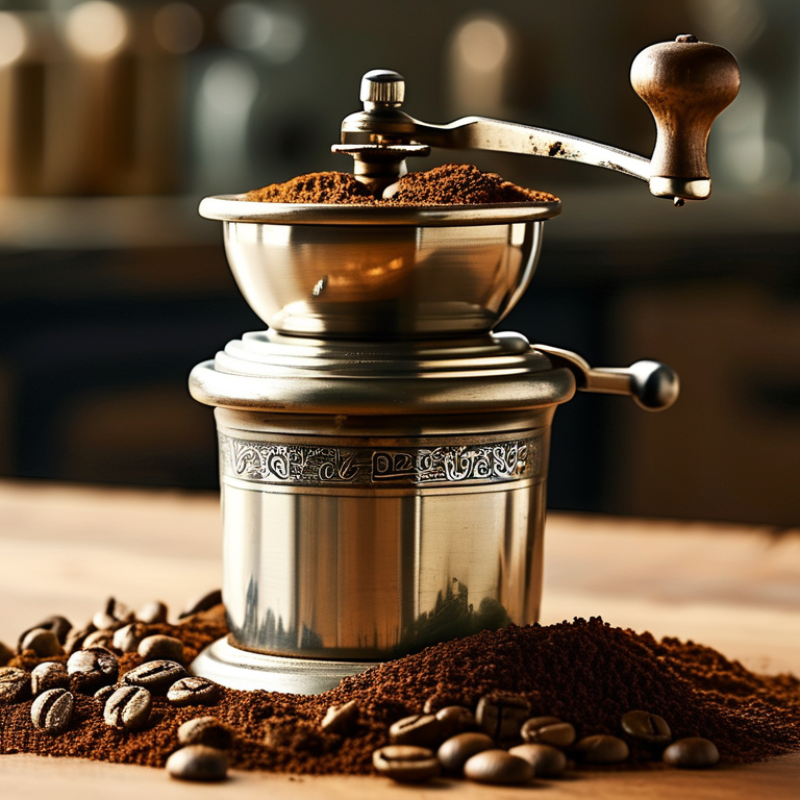
A stainless steel manual coffee grinder should offer more than a polished body. Its key feature is grind control. Look for hardened steel burrs, stable bearings, and a precise adjustment mechanism. These parts help produce consistent particles for espresso, pour-over, or French press brewing. A 2024 National Coffee Association report found that 67% of American adults drank coffee the previous day. More home drinkers now need equipment that performs reliably across different brewing methods.
Material quality also affects daily handling. A thick stainless steel housing resists dents and keeps the grinder steady on a kitchen counter. Check the handle length, grip texture, and crank resistance. A longer handle usually reduces effort, but it may increase storage difficulty. The internal axle should remain centered during grinding. Even a small wobble can create uneven particles. The Specialty Coffee Association emphasizes repeatability as a core part of brewing quality, although perfect uniformity is still difficult at home. I have found that easy cleaning matters more than attractive machining. This is an easy point to underestimate.
Tips: Choose a grinder with numbered settings and a secure adjustment lock. Test whether the grounds cup detaches without spilling. For frequent use, select a larger capacity, but remember that bigger bodies can feel tiring. Clean the burr chamber with a dry brush, not water. One practical warning: stainless steel does not guarantee durability. Weak threads, loose bearings, or poorly fitted burrs can still shorten its useful life.
How to Choose the Best Stainless Steel Manual Coffee Grinder - Define the Key Features of Stainless Steel Manual Coffee Grinders
| Key Feature | Recommended Specification | Why It Matters | What to Check Before Buying |
|---|---|---|---|
| Burr Material | Hardened stainless steel burrs for regular home use | Stainless steel burrs resist corrosion and are generally more durable than ceramic burrs when exposed to impact or uneven beans. | Confirm that the burrs, not only the outer body, are made from stainless steel. Check whether replacement burrs are available. |
| Burr Size | Approximately 38–48 mm for a balanced home grinder | Larger burrs can process beans more quickly and may reduce the effort required per grinding session. | Choose a smaller burr for portability and a larger burr when grinding several cups or brewing methods frequently. |
| Grind-Size Adjustment | Stepped or stepless adjustment covering fine to coarse settings | A broad adjustment range allows one grinder to support espresso-style brewing, pour-over, French press, and cold brew. | Look for clearly defined settings or a secure adjustment dial that does not move during grinding. |
| Grinding Consistency | A narrow particle-size distribution with limited fines and large fragments | More uniform grounds improve extraction control and help produce a cleaner, more repeatable cup. | Check independent tests or user measurements rather than relying only on advertising descriptions. |
| Body Construction | Stainless steel body with minimal plastic in load-bearing areas | A rigid body helps keep the burrs aligned and can improve durability during daily use. | Inspect seams, threads, bearings, and the connection between the handle and drive shaft. |
| Bearing Stability | Two or more accurately fitted bearings supporting the central shaft | Stable bearings reduce shaft wobble, which can contribute to uneven particle sizes and inconsistent extraction. | Rotate the handle without beans and check for side-to-side movement, grinding noise, or rough spots. |
| Bean Capacity | Approximately 20–35 g for most single-serve home brewing | This range commonly supports one to several cups, depending on the coffee-to-water ratio and brewing method. | Select a larger hopper for batch brewing, but avoid unnecessary capacity if compact storage is important. |
| Grounds Container | Removable container with a secure threaded or magnetic connection | A well-fitted container reduces spills and makes it easier to transfer grounds to a brewer. | Check the container capacity, stability, internal corners, and ease of cleaning. |
| Handle Design | Removable or foldable handle with a comfortable grip | A secure, ergonomic handle improves control and reduces hand fatigue during coarse grinding. | Look for a firm connection, a non-slip grip, and enough leverage for the intended grind size. |
| Portability | Compact cylindrical design; typically about 400–800 g for travel-friendly models | A compact stainless steel grinder is convenient for travel, office use, and outdoor brewing. | Compare total weight, packed dimensions, handle storage, and resistance to scratches or dents. |
| Cleaning and Maintenance | Tool-free access to the burr chamber and removable external components | Easy cleaning helps prevent stale coffee buildup and preserves grind performance. | Confirm which parts can be washed, which must remain dry, and whether the burr calibration can be restored after cleaning. |
| Corrosion Resistance | Food-contact components made from corrosion-resistant stainless steel | Corrosion resistance is useful in humid kitchens and helps maintain a clean, neutral-tasting grinding environment. | Keep the grinder dry after cleaning and verify whether the steel grade is specified in the product documentation. |
| Static and Retention | Low residual coffee retention in the burr chamber and grounds container | Lower retention reduces waste and helps prevent old grounds from mixing with a fresh dose. | Check for smooth internal surfaces, a compact grind path, and easy access to trapped grounds. |
| Noise and Heat | Smooth manual operation without excessive friction or heat buildup | Manual grinding is usually quieter than electric grinding and generates little heat when operated at a controlled speed. | Test the handle movement and avoid models with grinding resistance, squeaking, or rough burr contact. |
| Value and Serviceability | Replaceable burrs, seals, bearings, or adjustment components | Serviceable parts can extend the useful life of the grinder and reduce long-term replacement costs. | Review the warranty terms, spare-part availability, calibration procedure, and repair instructions. |