

- Home
- Request for Quote
- Products
- Variable Frequency Drive Systems and Controls
- AC Variable Frequency Drives
- ABB ACS150 Component Drives :: Overview
- ABB ACS150 Component Drives :: Technical Specifications
- ABB ACS150 Component Drives :: Ratings, Types, Voltages and Construction – Prices
- ABB ACS150 Component Drives :: Dimensions, Weight and Noise
- ABB ACS150 Component Drives :: Interface and Options (prices)
- ABB ACS150 Component Drives :: Technical Data
- ABB ACS150 Component Drives :: Control Connections
- ABB ACS350 General Machinery Drives :: Overview
- ABB ACS350 General Machinery Drives :: Technical Specifications
- ABB ACS350 General Machinery Drives :: Ratings, Types, Voltages and Construction
- ABB ACS350 General Machinery Drives :: Dimensions, Weight and Noise
- ABB ACS350 General Machinery Drives :: Interface and Options (prices)
- ABB ACS350 General Machinery Drives :: Technical Data
- ABB ACS350 General Machinery Drives :: Control Connections
- ABB ACS550 AC Variable Frequency Drive :: Overview
- ABB ACS550 AC Variable Frequency Drive :: Hardware Description
- ABB ACS550 AC Variable Frequency Drive :: Standard Features and Options
- ABB ACS550 AC Variable Frequency Drive :: Specifications
- ABB ACS550 AC Variable Frequency Drive :: 230V Ratings (pricing)
- ABB ACS550 AC Variable Frequency Drive :: 380V Ratings (pricing)
- ABB ACS550 AC Variable Frequency Drive :: 480V Ratings (pricing)
- ABB ACS550 AC Variable Frequency Drive :: Dimensions: ACS550 NEMA 1 R1 through R6 Frame Size
- ABB ACS550 AC Variable Frequency Drive :: Dimensions: ACS550 NEMA 12 R1 through R6 Frame Size
- ABB ACS550 AC Variable Frequency Drive :: Dimensions: ACS550-02 NEMA 1 R7 Frame Size
- ABB ACS550 AC Variable Frequency Drive :: Dimensions: ACS550-02 NEMA 1 R8 Frame Size
- ABB ACS550 AC Variable Frequency Drive :: Dimensions: ACS550-U2 NEMA 1 R7 & R8 Frame Size
- ABB ACS 600 Adjustable Speed AC Drives
- ABB ACS800 AC Variable Frequency Drive :: Overview
- ABB ACS800 AC Variable Frequency Drive :: Standard Features / Available Options and Software
- ABB ACS800 AC Variable Frequency Drive :: Specifications
- ABB ACS800 AC Variable Frequency Drive :: Basic Type Code Information
- ABB ACS800 AC Variable Frequency Drive :: 230V Ratings (pricing)
- ABB ACS800 AC Variable Frequency Drive :: 380V Ratings (pricing)
- ABB ACS800 AC Variable Frequency Drive :: 460V Ratings (pricing)
- ABB ACS800 AC Variable Frequency Drive :: ACS 800-U2 NEMA 1 R7 & R8 Frame Size and ACS 800-02+C111 IP21 (NEMA 1) R7 & R8 Frame Size
- ABB ACS800 AC Variable Frequency Drive :: ACS 800 NEMA 1/12 R2 through R6 Frame Size
- ABB ACS800 AC Variable Frequency Drive :: ACS 800-02 NEMA 1 R7 & R8 Frame Size
- ABB ACS800 AC Variable Frequency Drive :: ACS 800-U4 Module R7 Frame Size
- ABB ACS800 AC Variable Frequency Drive :: ACS 800-U4 Module R8 Frame Size
- ABB ACS880 Industrial Low Voltage AC Drives
- ABB ACS880 AC Drives – Technical Data
- Wall-mounted single drives, ACS880-01
- ABB ACS880 Ratings, types and voltages
- ABB ACS880 AC Drives – Dimensions & Connectivity
- ABB ACS880 AC Drives – Standard Software
- ABB ACS880 AC Drives – Intuitive Human-Machine Interface
- ABB ACS880 AC Drives – Integrated Safety
- ABB ACS880 AC Drives – Flexible Connectivity
- Input/output Modules, Speed Feedback Interfaces & Communication Modules
- ABB Softstarters, Type SSM, Medium Voltage, 2300-13,800V :: Description
- ABB Type SSM Softstarters – Medium Voltage, 2300-13,800V :: General Information
- ABB Type SSM Soft Starters – Medium Voltage, 2300 – 13,800V :: Catalog Numbers
- ABB Soft Starters, Type SSM – Medium Voltage, 2300-13,800V :: Technical Data
- ABB Softstarters, Type SSM, Medium Voltage, 2300-13,800V :: Approx. Dimensions
- Yaskawa AC Drives
- AuCom Soft Starters
- Emerson Industrial Automation (Control Techniques and Saftronics) AC Drives
- Control Techniques – Commander SE AC Drive
- Control Techniques – Commander SK AC Drive
- Commander SK :: Features
- Commander SK :: Terminal Diagram and Description
- Commander SK :: Specifications and Dimensions
- Commander SK – Options :: Overview
- Commander SK – Options :: Configuration and Programming
- Commander SK :: Operator Interface
- Commander SK :: Power Accessories
- Commander SK :: Environmental Protection and Cable Management
- Commander SK :: Input / Output
- Commander SK :: Communication
- Commander SK :: Programming Software
- Control Techniques – Commander SX AC Drive
- Commander SX :: Features, Ratings, Prices and Ordering
- Commander SX :: Terminal Diagram and Description
- Commander SX:: Specifications and Dimensions
- Commander SX :: Options – Overview / Drive Configuration and Programming
- Commander SX :: Communication / Operator Interface
- Commander SX :: Power Accessories
- Commander SX :: Input/Output and Communication
- Control Techniques – Unidrive SP AC Drive
- Unidrive SP :: Features
- Unidrive SP :: Ratings, Prices & Ordering – Wall Mount
- Unidrive SP :: Ratings, Prices & Ordering – Free Standing Cubicle
- Unidrive SP :: Unidrive SP Regen Mode
- Unidrive SP :: Terminal Diagram and Description
- Unidrive SP :: Specifications and Dimensions
- Unidrive SP :: Options – Overview
- Unidrive SP :: Operator Interface
- Unidrive SP :: Power Accessories
- Unidrive SP :: Option & Feedback Modules
- Unidrive SP :: Option Input / Output Modules
- Unidrive SP :: Option Application / Programming Modules
- Unidrive SP :: Option Communication Modules
- Unidrive SP :: Drive Configuration and Programming
- Unidrive SP :: Application Programming Software
- Unidrive SP :: Pre-packaged Solutions
- Saftronics GP10 AC Drives
- Saftronics GP10 – Pricing, Dimensions & Weights
- Saftronics GP10 – Optional DC Link Reactors
- Saftronics GP10 – Options & Accessories
- Saftronics GP10 – Palm Pilot Saflink Kit
- Saftronics GP10 – SR10 Radio Modem Kit
- Saftronics GP10 – Relay Output Card
- Saftronics GP10 – Digital I/O Interface Card
- Saftronics GP10 – Analog I/O Interface Card
- Saftronics GP10 – SF-10 Ethernet Module
- Saftronics GP10 – Interface Option Card
- Saftronics GP10 – Under Torque Detection Option
- Saftronics GP10 – 24 VDC or 24/120 VAC Interface
- Saftronics GP10 – Air Pressure Sensor + V/I Converter Output Card
- Saftronics GP10 – HMI Pump Controller
- Saftronics GP10 – SDBU – Dynamic Brake Module
- Saftronics GP10 – 208-230V Dynamic Brake Packages
- Saftronics GP10 – 460V Dynamic Brake Packages
- Saftronics GP10 – Ratings Efficiency & Watts Loss
- Saftronics GP10 – Standard Specifications
- Saftronics GP10 – Basic Connection Diagram
- Saftronics GP10 – Basic Connection Diagram to PLC
- Saftronics GP10 – Basic Connection Diagram (Europe)
- Saftronics GP10 – Basic Connection to PLC (Europe)
- Saftronics S10 AC Drives
- Saftronics S10 – Options and Accessories
- Saftronics S10 – Standard Specifications
- Saftronics S10 – Dimensions
- Saftronics S10 – Dimensions – Part Number: S102002 – S102003 & S104001 – S104003
- Saftronics S10 – Dimensions – Part Number: S102F25 – S102001
- Saftronics S10 – Dimensions — Part Number: S102F25 – S102001 no Operators
- Saftronics S10 – Dimensions – Part Number: S102002-2003 & S104001-4003
- Saftronics S10 – Basic Wiring Diagram
- Saftronics CV10 AC Drives
- Saftronics CV10 – Part Numbers, Dimensions & Weights
- Saftronics CV10 – LED Keypad with Speed Pot
- Saftronics CV10 – LCD Keypad (supports 5 Languages)
- Saftronics CV10 – Keypad Extension Cable
- Saftronics CV10 – Communication Option Cards
- Saftronics CV10 – Bi-Polar Speed Reference Option Card
- Saftronics CV10 – Standard Specifications
- Saftronics CV10 – Ratings Efficiency and Watts Loss
- Saftronics CV10 – Dimensions Frame 1 – IP20 (Open Chassis)
- Saftronics CV10 – Dimensions Frame 1 – NEMA 1
- Saftronics CV10 – Dimensions Frame 2 – IP20 (Open Chassis)
- Saftronics CV10 – Dimensions Frame 2 – NEMA 1
- Saftronics CV10 – Dimensions Frame 3 – IP20 (Open Chassis)
- Saftronics CV10 – Dimensions Frame 3 – NEMA 1
- Saftronics CV10 – Basic Wiring Diagram
- Saftronics VG10 AC Drive
- Saftronics VG10 – Pricing, Dimensions & Weights
- Saftronics VG10 – Optional DC Link Reactors
- Saftronics VG10 – Options and Accessories
- Saftronics VG10 – Palm Pilot Saflink Kit
- Saftronics VG10 – Relay Output Card
- Saftronics VG10 – SR10 Radio Modem Kit
- Saftronics VG10 – Digital I/O Interface Card
- Saftronics VG10 – Analog I/O Interface Card
- Saftronics VG10 – SF-10 Ethernet Module
- Saftronics VG10 – PGX Encoder Feedback Card
- Saftronics VG10 – Encoder + Analog Output Card
- Saftronics VG10 – PG Feedback Card SOPCG11SPG
- Saftronics VG10 – PG Feedback Card SOPCG11SPG2
- Saftronics VG10 – Synchronized Operation Card
- Saftronics VG10 – 24 VDC or 24/120 VAC Interface Card Kit
- Saftronics VG10 – Air Pressure Sensor + V/I Converter Output Card
- Saftronics VG10 – SDBU – Dynamic Brake Module
- Saftronics VG10 – 208-230V Dynamic Brake Packages
- Saftronics VG10 – 460V Dynamic Brake Packages
- Saftronics VG10 – Ratings Efficiency and Watts Loss
- Saftronics VG10 – Standard Specifications
- Saftronics VG10 – DC Link Reactor 100 HP and Above
- Saftronics VG10 – Basic Connection Diagram (Sink Logic, Mainly America)
- Saftronics VG10 – Basic Connection Diagram to PLC (Sink Logic, Mainly America)
- Saftronics VG10 – Basic Connection Diagram (Source Logic, Mainly Europe)
- Saftronics VG10 – Basic Connection Diagram to PLC (Source Logic, Mainly Europe)
- Saftronics PC10 (Obsolete) AC Drives
- Saftronics PC10 – Options & Accessories
- Saftronics PC10 – SF-10 Ethernet Module Kit
- Saftronics PC10 – 24 VDC or 24/120 VAC Input + Relay Option Card
- Saftronics PC10 – 24 VDC or 24/120 VAC Interface Card Kit (PC10, GP10, or VG10 Inverter)
- Saftronics PC10 – Relay Output Card
- Saftronics PC10 – HMI Pump Controller
- Saftronics PC10 – PC10 120 VAC Option Card
- Saftronics PC10 – Palm Pilot Saflink Kit
- Saftronics PC10 – Dynamic Braking
- Saftronics PC10 – Drive Ratings Efficiency and Watts Loss
- Saftronics PC10 – Standard Specifications
- Saftronics PC10 – Part Number: PC102F12-9, PC102F25-9, PC102F50-9 & PC102001-9
- Saftronics PC10 – Part Number: PC102002-9, PC102003-9, PC104F50-9, PC104001-9, PC104002-9 & PC104003-9
- Saftronics PC10 – Part Number: PC102005-9 & PC104005-9
- Saftronics PC10 – Part Number: PC102007-9, PC102010-9, PC104007-9 & PC104010-9
- Saftronics PC10 – NEMA 1 Kit Dimensions
- Saftronics PC10 – Basic Wiring Diagram
- Fincor 5700 Series (Obsolete) AC Drive
- Fincor 5740 Series (Obsolete) AC Drive
- Fincor 5750 Series (Obsolete) AC Drives
- Motortronics Soft Starters
- SOLCON Soft Starters
- SOLCON RVS-DN Digital Soft Starter with Advanced Motor Protection
- Solcon HRVS-DN Digital Soft Starter with Advanced Motor Protection
- Solcon HRVS-TX Digital Transformer Soft Starter
- SOLCON RVS-AX Analog Soft Starters
- SOLCON Solstart Plus Analog Soft Starters
- SOLCON RVS-BX Basic Soft Starter with Built-In Bypass
- SOLCON RVS-DX Digital Soft Starter with Built-In Bypass
- SOLCON RVS-EX Digital Soft Starter for Explosion Proof motors with Built-In Bypass
- SOLCON SEM-N Rugged Soft Starter for Naval and Military Specifications
- SOLCON SOLSTART Miniature Analogue Soft Starter
- SOLCON SOLSTART 1P Single Phase Analogue Soft Starter
- SOLCON SOLBRAKE DC Injection Brake Soft Starter
- Magnetek – Soft Starters
- WEG Variable Frequency Drives, Controls and Motors
- ABB ACS150 Component Drives :: Overview
- DC Variable Speed Drives
- DC Drive Fundamentals
- ABB DCS 400 Digital DC Converter Drive
- ABB DCS 500 DC Drive
- ABB DCS800 DC Drives Overview
- DCS800 – Power Converter Modules
- DCS800 Panel Drive
- DCS800 Enclosed Converters
- DCS800 Rebuild and Upgrade Kits
- Adaptive Programming and Start-up Assistants
- DriveWindow Light – Startup and Maintenance Tool
- DCS800 Commissioning Macros
- DCS800 Firmware
- DCS800 Technical Specifications
- Current Ratings – Modules – Non-Regenerative
- Current Ratings – Modules – Regenerative
- Current Ratings – Modules – DCS800-EP Panel Drive
- DCS800 Dimensions and Weights
- DCS800 Technical Diagram
- DCS800 Plug-in Options
- DCS800 Feedback Options
- DCS800 Communication Options – Fieldbus Control
- DCS800 External Field Supply
- ABB DCS800-EP replaces Reliance FlexPak® 3000 – 230V Drive Cross Reference
- ABB DCS800-EP – 460V Drive Cross Reference
- ABB DCS800-EP – Options Cross Reference
- ABB DCS800-EP – Product Differences and Remedies – Hardware
- ABB DCS800-EP – Product Differences and Remedies – Control/Interface & Features
- ABB DCS800-EP – Drive Dimensions
- ABB DCS800-EP – Installation Procedure – Wiring and Configuration
- ABB DCS800-EP – Parameter Cross-Reference
- FINCOR Series 2600/2610 DC Drives
- 50 Amp & 90 Amp DC Field Regulators
- Mentor II | Quantum III | FXM5 Change of Status
- SIMOREG 6RA24 Siemens DC Drive Features
- SIMOREG 6RA70 Siemens Variable Speed DC Drive Description and Base Drive Catalog Numbers
- SIMOREG 6RA70 Siemens DC Drive Features
- SIMOREG 6RA70 DC Master Design & Operation – Converters
- SIMOREG 6RA70 Design & Operation – Parameterization Devices
- SIMOREG 6RA70 Design & Operation – Software Structure
- SIMOREG 6RA70 Design & Operation – Closed-Loop Functions in Armature Circuit
- SIMOREG 6RA70 Design & Operation – Closed-Loop in Field Circuit
- SIMOREG 6RA70 Design & Operation – Optimization Run
- SIMOREG 6RA70 Design & Operation – Monitoring & Disgnosis
- SIMOREG 6RA70 Design & Operation – Functions of Inputs & Outputs
- SIMOREG 6RA70 Design & Operation – Safety Shutdown (E-STOP)
- SIMOREG 6RA70 Design & Operation – Serial Interface
- 1000 Hp DC Variable Speed Drive System
- 3000 Hp DC Variable Speed Drive
- Permanent Magnet DC Motors
- SCR Drive Controllers (SCR-Silicon Controlled Rectifier)
- Custom Electric Control Panel Shop
- GE AC & DC Motors (G.E. Motors – General Electric AC & DC Motor)
- GE X$D Ultra® NEMA Premium Efficiency – TEFC AC Motors
- GE Kinamatic® Explosion Proof AC Motors
- GE Energy Saver® – TEFC Severe Duty AC Motors
- GE Kinamatic® General Purpose AC Motors
- GE Motors Energy Saver NEMA Premium Efficiency – ODP AC Motors
- GE ValueLine™ EPAct Efficiency – TEFC AC Motors
- GE ValueLine™ EPAct Efficiency – ODP AC Motors
- GE Permanent Magnet Custom DC Motors
- GE ValueLine™ Vertical Hollow Shaft AC Motors
- GE Permanent Magnet Standard DC Motors
- GE ASD Inverter Duty AC Motors
- G.E. Permanent Magnet Washdown DC Motors
- Avtron – Drives, Measurement and Tachs
- Avtron – Adjustable Speed Drives and Drive Systems
- Avtron – Speed and Length Measurement
- Avtron – Tachs, Tachometers, Encoders, Rotary Pulse Generators
- Avtron – Sales Literature and Instruction Sheets
- Avtron – Classic Tach Models
- Avtron – Price Quotation Request Form
- Avtron – Tachometers Availability
- Avtron – Heavy, Mill-Duty Encoders
- Avtron – Setting Air Gap on M285 Sensors
- Avtron – M4 Universal Encoder
- Avtron – M56, M67, M85 THIN-LINE
- Avtron – M285QUAD Outline Drawing
- Avtron – Severe Duty Encoders
- Avtron – Mill-Duty Encoders
- Avtron – M3 Universal Encoder
- Avtron – M3 Applications
- Avtron – M3 Installation
- Avtron – M3 Specifications
- Avtron – Tach Accessories
- Avtron – Tach Solutions
- Avtron – Rugged Environments
- Avtron – Selection by Motor Frame Size
- Avtron – Adapter Kits Outline Drawings
- Avtron – Motors with Brakes
- Avtron – NEMA C Face Mounting
- Avtron – Market Specific Applications
- Dynapar Encoders and Tachs
- ACURO AI25 Encoders
- Acuro Series AI25 Absolute Encoder with DeviceNet Interface
- Acuro Series AI25 Absolute Encoder with Profibus Interface
- Acuro Series AI25 Absolute Encoder with Interbus Interface
- Acuro Series AI25 Absolute Encoder with BiSS Interface
- Acuto Series AI25 Optical Encoders with SSI Interface
- Acuro Series AI25 Absolute Encoder with Parallel Interface
- Acuro Series AD25 Drive Absolute Encoder
- Series R25 – Mill Duty, HOUSED Resolver
- Series 21/22 Heavy Duty Incremetal Encoders
- Series H20 Encoder
- Series HA25 Dynapar Heavy Duty Encoders
- Series HR25 Incremental Encoders
- Series HC25 Incremental Encoders
- Series H58 Heavy Duty Encoders
- Series H42 Heavy Duty Encoders
- Series HA725 Indusrtial Duty Encoders
- Series HD20 Optical Encoder
- Series HD25 Optical Encoder – Harsh Duty
- Series H56 Rotopulser Heavy Duty Encoders
- RIM Tach 6200 Digital Tachometer
- Series X25 Incremental Encoders
- Series 60 Rotopulser Incremental Encoders
- Series H20 Hub Shaft Encoders
- Series HSD25 Harsh Duty Optical Encoders
- Series HSD44
- Series HS20 Sealed Hollow Shaft Encoders
- Series HS35 Sealed Hollow Shaft Encoders
- The NEW HS35R
- Series HSD35 Shaftless Optical Encoder
- Series HSD37 Hollowshaft Rotary Encoder
- Series HSD38 Harsh Duty Optical Encoder
- Series DWD38 Heavy Duty Rotary Encoders
- SLIM Tach HS56 Incremental Encoder / Tachometer
- RIM Tach HS85 Digital Tachometer
- SLIM Tach SL56 Rotary Encoder
- SLIM Tach RL67 Incremental Rotary Encoder
- SLIM Tach SL85 Digital Tachometer
- SLIM Tach SL1250 Incremental Encoder
- RIM Tach 8500 Digital Tachometer
- RIM Tach 1250 Digital Tachometer
- Series R45 Rotopulser Incremental Encoders
- ACURO AI25 Encoders
- Spare Parts and Replacement Parts
- PLC (Programmable Logic Controllers)
- Services
- Projects
- Operator Stations by Joliet Technologies
- AC VFD, AC Controllers and DC VSD by Joliet Technologies
- Material Handling Modernization Project by Joliet Technologies
- 10 DC (SCR) Drive System :: Neptune Marine Oil & Gas
- Mermaid Offshore Services :: 4 DC (SCR) Drive Cabinets
- “Frontier Driller” Offshore Oil Rig :: DC (SCR) Drive Bays
- 1000Hp Siemens SIMOREG 6RA70 DC Variable Speed Drive Retro-Fit
- Smurfit-Stone: Corrugator Crew Sets Production Record
- Steel Slitting Line for Braner USA
- 1000HP DC Drive, Bow Thruster Application for Pegler Automation
- 1000HP DC Traction Motor Drive, Slurry Pump Application for Baker Hughes
- Siemens 6RA70 DC Drive and GE 752 Traction Motor to Hallett Materials
- ABB ACS 800 VFD to Applied Synergistic
- Two 200Hp Variable Speed DC Drives and Motors to JHT Electronics
- Substrate Technology Inc. :: Joliet Technologies, L.L.C.
- Wyco Tool Company
- Variable Frequency Drives and Controls for Food Processing and Bakery Machinery
- Information
- Guide to Harmonics with AC Variable Frequency Drives
- Variable Speed Drives – Application Information
- Reducing harmonics caused by variable speed drives
- FAQ – Variable Speed Drives Frequently Asked Questions
- EASA Electrical Engineering Handbook
- Part Winding Start
- 3Ph Motors, Single Speed
- 3Ph Motors, 2 Speed, Single Winding
- Connections for NEMA DC Motors
- Connections for NEMA DC Generators
- Field Polarities of DC Machines
- Maximum Locked-Rotor Currents – Three-Phase Squirrel Cage Motors
- NEMA Code Letters for AC Motors
- General Speed-Torque Characteristics
- Effect of Voltage unbalance on Motor Performance
- Starting Characteristics of Squirrel Cage Induction Motors
- Allowable Starts and Starting Intervals
- NEMA Size Starters for Three-Phase Motors
- Starter Enclosures
- NEMA Size Starters for Single-Phase Motors
- Determining the Polarization Index of Machine Windings
- Formulas for Electrical Motors
- Motor Application Formulas
- Glossary of Terms
- Variable Frequency Drive (VFD) Case Studies
- VFD Case Studies – ABB drives & motors help to launch lifeboats quickly and safely.
- VFD Case Studies – Paperboard mill benefits from using DC drives
- VFD Case Studies – ABB Drive cuts water pumping bill for semiconductor plant.
- VFD Case Studies – Insulation manufacturing process saves energy with ABB :: Joliet Technologies
- VFD Case Studies – ABB drives cut costs at MINI production plant
- VFD Case Studies – Film maker slashes costs with ABB drives
- VFD Case Studies – ABB drive cuts costs for wooden toy company
- VFD Case Studies – Close pump control doubles efficiency for West of Scotland Water
- VFD Case Studies – ABB Energy Appraisal Saves Money :: Joliet Technologies
- VFD Case Studies – Staggering energy savings prove value of professional audit
- VFD Case Studies – Soft starters save costs for mechanical engineers
- NEMA Frame Chart and T-Frame Chart :: Joliet Technologies
- Model 1681 Instruction Manual – Firing Circuits DC SCR Drives
- IGBT – Insulated Gate Bipolar Transistors :: Joliet Technologies
- Blog
Blog
Top 10 Infrared Light Therapy Devices to Buy?
Choosing an infrared light device is not as simple as comparing wattage or counting LEDs. The Top 10 Infrared Light Therapy Devices to Buy? should help readers compare practical details before making a purchase. These include wavelength ranges, treatment area, output information, controls, build quality, and warranty terms. A sleek panel can look convincing on a product page. Real-world use is less glamorous: distance, session length, and consistent placement all matter.
Photomedicine researcher Dr. Michael Hamblin’s published work examines how light parameters affect biological responses. In paraphrase, a key takeaway from his research is that wavelength and delivered dose matter. That is useful context, not a guarantee that a particular device will produce a health benefit. Red light and near-infrared light are also not interchangeable labels; buyers should check the actual specifications and the manufacturer’s instructions. Be cautious with bold promises. Some claims deserve closer scrutiny.
This guide compares ten devices across design, usability, available specifications, and intended use. It also flags details that are easy to overlook, such as eye-safety guidance, adjustable intensity, and whether a device suits a small treatment area or a larger one. No single model fits everyone. That is worth admitting. The best choice depends on personal needs, budget, and comfort with the device’s instructions. Readers with medical concerns should seek advice from a qualified healthcare professional rather than treating a product ranking as medical guidance.
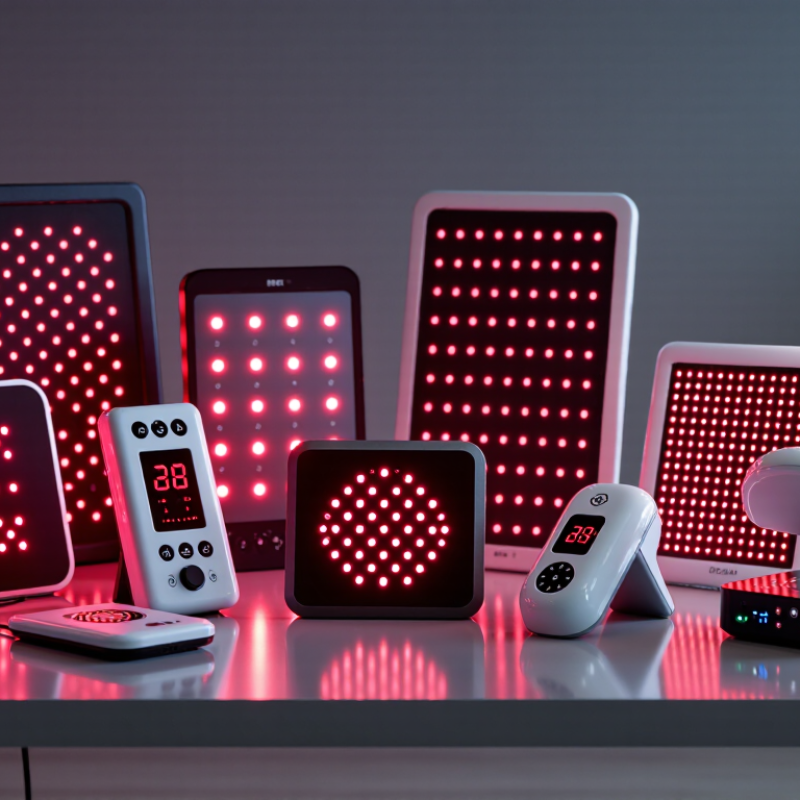
What Infrared Light Therapy Is and How It Works
Infrared light therapy uses selected wavelengths of non-ionizing light, often near-infrared, directed at the body. Some devices also emit visible red light. Unlike an infrared heat lamp, a light therapy device may aim to deliver light without making warmth its main effect. Still, some models feel warm against the skin.
Researchers study how cells respond to light. One proposed pathway involves light-sensitive molecules in mitochondria, which may influence cellular signaling. The details are not fully settled, and results can differ by condition, wavelength, dose, and device. It is not magic. Near-infrared light may reach deeper tissue than visible red light, but actual penetration varies with skin and tissue, so claims of precise depth deserve caution.
Treatment usually means placing a panel, wrap, or handheld device at a specified distance for a set time. Follow its instructions; more exposure is not automatically better. Eye precautions matter, especially with bright or intense sources. People taking medicines that increase light sensitivity, or managing a medical condition, should ask a qualified clinician before use. Evidence is still uneven. A device’s wavelength and tested output are more useful details than broad promises, though even those details do not guarantee a particular result.
Common Types of Infrared Light Therapy Devices
Infrared light therapy devices come in several forms, and their size often shapes everyday use. Large panels sit on a stand or wall, covering a broad area while you remain nearby. Handheld devices treat smaller spots, such as a knee or shoulder, but require steady positioning. Wearable wraps and belts fit around selected areas. They can be convenient, though fit and coverage vary.
Some devices use red and near-infrared LEDs; others rely on infrared heat. These approaches are not interchangeable. Heat-based lamps and saunas warm the body, while light-based devices deliver specific wavelengths. Product labels may blur this distinction. Still, details matter. Check the stated wavelength, treatment area, instructions, and safety guidance. Evidence and results can differ by device and intended use, so avoid assuming one format suits everyone.
Tips: Match the device to the area you can comfortably reach. Keep sessions within the manufacturer’s directions, and protect your eyes when instructed. Compare the actual coverage, not just the device’s advertised size. If you have a health condition or take light-sensitive medication, ask a qualified clinician before use. The terminology is confusing; I’d double-check it.
How to Compare Wavelength, Coverage, and Safety
When comparing infrared light therapy devices, treat wavelength as a specification, not a quality score. Some devices list red light around 630–660 nm and near-infrared light around 810–850 nm. These ranges are examples, not proof of effectiveness. Check whether the manufacturer clearly reports the wavelengths and explains how they were measured. A broad wavelength range is not automatically better. Small print matters.
Coverage can change how practical a device feels. Check the illuminated area and the recommended distance from your skin. A panel may look large but deliver uneven light near its edges. Look for irradiance figures at a stated distance, rather than relying only on total power claims. If the information is missing, comparing treatment times becomes difficult. That is worth noticing.
Safety deserves equal attention. Read the instructions for session length, distance, and any required eye protection. The light may feel gentle, but some devices can produce noticeable warmth; stop if you experience discomfort. People with light sensitivity, relevant medical conditions, or medicines that increase photosensitivity should ask a healthcare professional before use. I would also check whether the device has clear operating guidance and support information. Specs can look reassuring, yet they do not answer every question.
Infrared Light Therapy: Comparing Common Wavelengths
Representative red and near-infrared wavelengths used in light-therapy devices. Wavelength alone does not determine effectiveness or safety; irradiance, treatment distance, exposure time, and device testing also matter.
Use eye protection when advised by the device instructions, and follow the manufacturer’s exposure guidance. This chart compares wavelength values, not product performance or treatment outcomes.
Top 10 Infrared Light Therapy Devices to Consider
Choosing among infrared light therapy devices starts with the treatment area, not a ranking. Options include full-body panels, tabletop panels, handheld units, flexible wraps, pads, lamps, facial masks, joint-focused devices, wearable belts, and larger treatment beds. Each suits a different routine. A handheld unit can reach a small area; a panel covers more skin but needs space and careful positioning.
Grand View Research estimated the global light therapy market at about US$1.1 billion in 2023, with projected annual growth of 5.8% from 2024 to 2030. That is market context, not proof that every device works. Compare stated wavelengths, measured irradiance, treatment distance, coverage, and independent testing. Look for clear eye-safety instructions and a timer. Vague specifications deserve caution.
A useful shortlist might include a panel for broad exposure, a wrap for flexible placement, or a handheld device for targeted use. Masks and belts are convenient, but fit and actual light output can vary. Check the device’s intended use and supporting clinical evidence; results depend on the condition and protocol.
The details can feel tedious. They matter. This shortlist is imperfect: device labels do not always make comparisons easy, and more light is not automatically better. Grand View Research’s figures describe industry growth, not clinical outcomes.
How to Choose and Use a Device Responsibly
Choosing a device starts with its specifications, not its glow. Check wavelength, irradiance, treatment distance, timer, and eye-safety instructions. These details help you compare exposure rather than marketing claims. ICNIRP’s 2013 guidelines define infrared radiation as wavelengths from 780 nanometres to 1 millimetre. That is a broad range, not one interchangeable treatment. A 2013 BMJ review examined 16 randomized trials involving 820 people with neck pain. Low-level laser therapy reduced pain by 1.2 centimetres on a 10-centimetre scale, compared with control. However, those study protocols do not validate every home infrared device. Important distinction.
Follow the device’s stated duration and distance; stop if your skin burns, your eyes feel uncomfortable, or symptoms worsen. Never stare into an emitter. Use eye protection when the instructions require it. People with eye conditions, photosensitivity, reduced sensation, or ongoing treatment should ask a clinician before use. Keep a simple note of session length and symptoms. I might be tempted to turn the intensity up when nothing happens. That is not a reliable measure of progress. If symptoms persist, seek professional advice rather than relying on light alone.
Top 10 Infrared Light Therapy Devices to Buy? - How to Choose and Use a Device Responsibly
This comparison covers common device types rather than specific models or brands. Specifications and intended uses vary by device; verify the product label, independent testing, and operating instructions before buying.
| Device Type | Typical Light or Heat Output | Coverage and Practical Use | What to Check Before Buying | Responsible-Use Considerations |
|---|---|---|---|---|
| 1. Tabletop red and near-infrared panel | Often combines visible red light around 630–660 nm with near-infrared light around 810–850 nm; specifications vary. | Small to medium treatment area. Can be positioned in front of a chosen area while seated or standing. | Published wavelengths, measured irradiance at stated distances, treatment-area dimensions, timer, and electrical safety information. | Follow the stated distance and session instructions. Do not assume that a higher output or longer session is better. |
| 2. Large or full-body panel | Commonly offers red light, near-infrared light, or both; wavelength and output depend on the model. | Can illuminate a larger area than a tabletop panel, but may require more room and careful positioning. | Usable illuminated area, output measurements across the treatment area, mounting stability, cooling, and power requirements. | Keep the device ventilated and securely mounted. Protect eyes when instructed, especially when facing bright LEDs. |
| 3. Handheld red or near-infrared device | May use red LEDs, near-infrared LEDs, or both; confirm the exact wavelengths in the specifications. | Small, targeted areas. Portable, but treating a larger area can take longer. | Contact or non-contact use instructions, treatment-head size, battery or cord details, timer, and output data. | Move or position it only as directed. Avoid prolonged pressure or heat on one spot, and do not use on damaged skin unless advised by a clinician. |
| 4. Flexible light-therapy wrap | Usually uses red and/or near-infrared LEDs; the wavelengths and light output are product-specific. | Designed to conform around selected body areas, such as a limb or joint region. | Fit and fastening method, coverage, flexibility, cleaning instructions, timer, and whether the device is intended for contact use. | Do not wrap tightly or use in a way that traps excessive heat. Check skin during and after use. |
| 5. Red or near-infrared belt | Typically LED-based; some products emit red light, near-infrared light, or a combination. | Wearable format intended to cover a band-shaped area around the torso or another body region. | Adjustability, illuminated area, output measurements, power source, and clear guidance on clothing and skin contact. | Use only for the recommended duration. Avoid use while sleeping unless the instructions explicitly allow it. |
| 6. LED face mask | Often uses visible red LEDs; some models also include near-infrared wavelengths. Check the exact wavelength list. | Designed for facial coverage. Fit and light distribution can differ substantially between masks. | Eye-area design, fit, cleaning method, treatment timer, wavelength information, and any required eye protection. | Follow the eye-safety instructions. Ask a clinician before use if you have an eye condition, light sensitivity, or a photosensitizing medication. |
| 7. Scalp or hair-coverage LED device | May use visible red light or other specified wavelengths; do not infer wavelength or effectiveness from appearance alone. | Designed to cover part or all of the scalp, depending on the device format. | Coverage, fit, treatment schedule, wavelength and output disclosures, and evidence supporting the device’s stated intended use. | Discuss persistent hair loss with a qualified clinician. Avoid use on irritated or injured scalp unless advised. |
| 8. Small spot-treatment wand | Usually a small LED treatment head emitting red light, near-infrared light, or both; verify specifications. | Targets a limited area. Compact size can be convenient, though coverage per session is small. | Spot size, timer, output at the treatment surface, charging or power details, and clear operating instructions. | Keep the treatment head clean if it touches skin. Do not use near the eyes unless the device is specifically designed for that use. |
| 9. Foot or lower-limb light device | May use red and/or near-infrared LEDs; some designs provide light to the top, sides, or sole of the foot. | Purpose-built coverage for feet or lower limbs; coverage depends on the design and fit. | Which surfaces are illuminated, accessible controls, cleaning requirements, and output data at the intended position. | People with reduced sensation or circulation should seek medical guidance before using a device that can produce warmth. |
| 10. Infrared heat lamp | Produces radiant heat and may emit a broad range of infrared wavelengths; it is not necessarily equivalent to a red/NIR LED photobiomodulation device. | Provides localized warming over an area positioned in front of the lamp. | Heat output, adjustable distance, stable stand, timer, protective grille, and clear burn-prevention instructions. | Maintain the specified distance and monitor skin. Do not use while asleep or where reduced sensation makes heat injury harder to notice. |
Use and buying note: Red-light and near-infrared LED devices are different from heat lamps and infrared saunas. Evidence and authorized uses vary by device and condition; a device’s wavelength or marketing claims alone do not establish that it will treat a health problem. Follow the manufacturer’s instructions, use eye protection when specified, and consult a healthcare professional if you are pregnant, have a medical condition, take medication that increases light sensitivity, or are considering use for a diagnosed condition.